

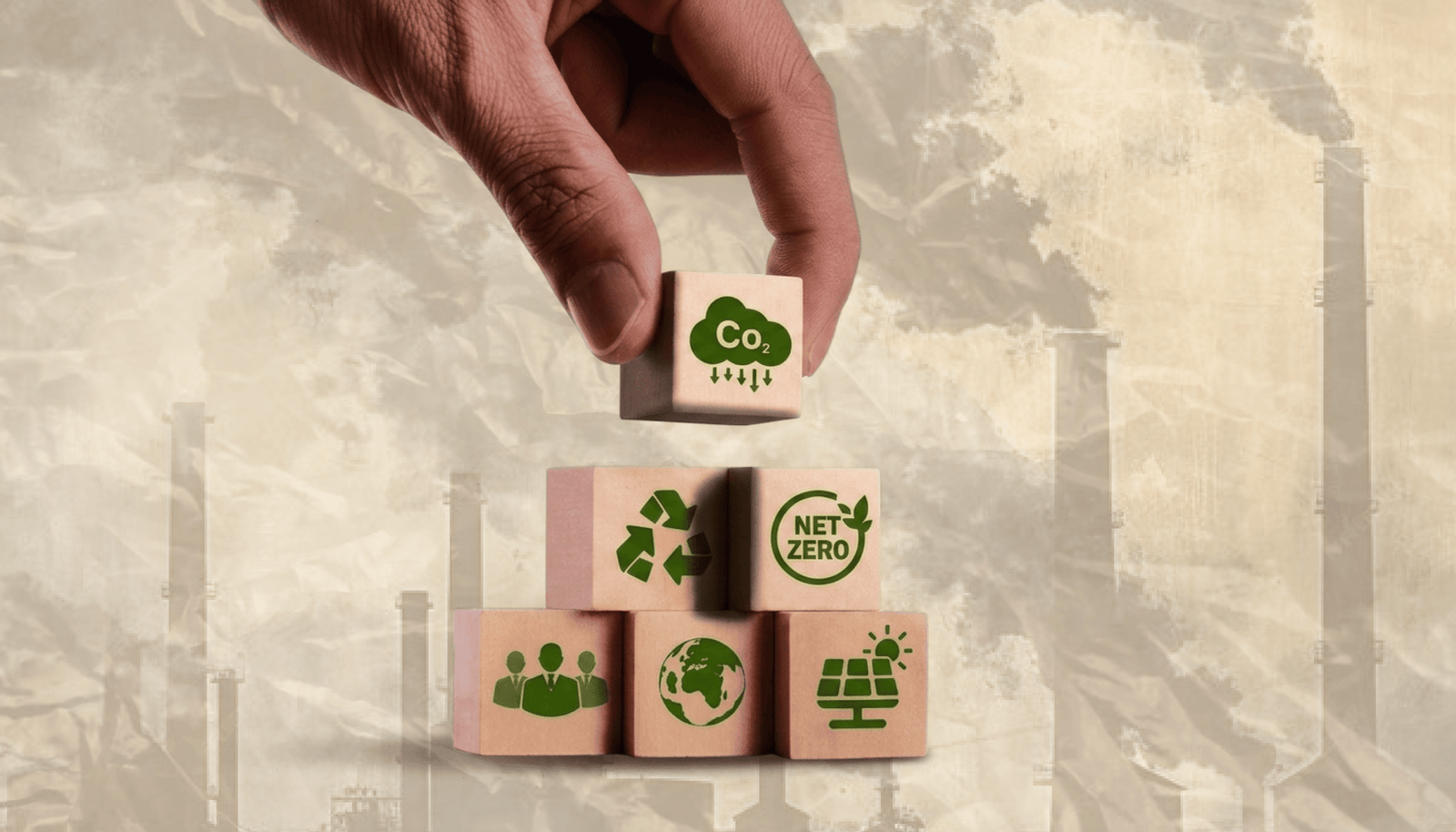
India is entering a new phase of environmental regulation—where carbon emissions are not just monitored, but priced.
For businesses, this shift means one thing:
Carbon is becoming a compliance metric and a financial opportunity.
What Are Carbon Credits?
At its core, a carbon credit is simple:
1 carbon credit = 1 tonne of CO₂e reduced or removed.
These credits act as tradable environmental assets.
Companies that reduce emissions can earn credits, while those exceeding limits may need to purchase them.
This creates a structured system where emissions have a cost and reductions have value.
India’s Carbon Market Direction
The Government of India has introduced the Carbon Credit Trading Scheme (CCTS) under the Energy Conservation Act, 2001 (amended).
This is a significant shift.
India is moving from the earlier Perform, Achieve and Trade (PAT) scheme—focused mainly on energy efficiency—towards a comprehensive carbon market.
Key direction of the policy:
- Establish a national carbon market
- Introduce compliance-based obligations for notified sectors
- Enable trading of carbon credit certificates
- Align with India’s net-zero commitments
This is not a voluntary initiative alone it is designed to become part of mainstream compliance.India’s framework is expected to evolve in phases, including compliance mechanisms for notified sectors alongside voluntary participation.
How the System Will Work (In Practice)
Under the emerging framework:
- Certain sectors will be identified as “obligated entities”
- These entities will have emission intensity targets
- Businesses that perform better can generate carbon credits
- Those falling short will need to purchase credits
A structured system of Measurement, Reporting and Verification (MRV) will ensure credibility and transparency.
This creates a market-driven compliance mechanism, rather than only regulatory penalties.
Role of Regulators
- Ministry of power
- Bureau of Energy Efficiency (BEE)
- National Steering Committee for the Indian Market (NSCICM)
India’s approach builds on its growing experience with digital compliance ecosystems, including CPCB’s EPR portals for waste management, signalling a broader shift toward transparent, traceable and technology-driven environmental markets.
Types of Carbon Projects
Businesses can participate by developing or investing in projects such as:
- Renewable energy (solar, wind, biomass)
- Industrial energy efficiency improvements
- Waste-to-energy and resource recovery systems
Each project must follow government-approved methodologies and undergo verification before credits are issued.
What This Means for Businesses
This transition creates both compliance pressure and strategic opportunity.
1. Carbon Becomes a Cost Line
Emissions will increasingly translate into financial liability for obligated sectors.
2. Sustainability Becomes Revenue
Efficient companies can generate and sell credits, creating a new income stream.
3. Export Competitiveness
With global mechanisms like carbon border taxes emerging, Indian exporters will need credible carbon data and reduction strategies.
4. Early Movers Win
Organizations that build systems early data tracking, audits, reduction strategies will gain cost and compliance advantages.
Key Risks to Watch
While the opportunity is significant, businesses must be mindful of:
- Verification and compliance complexity
Strong documentation and MRV systems will be critical. - Price volatility
Carbon markets are influenced by policy, demand, and global trends. - Evolving regulations
The framework will develop in phases requiring continuous tracking of government notifications.
Conclusion
India’s carbon market is not just an environmental initiative it is the foundation of a new compliance economy.
- Emissions will be measured
- Reductions will be monetized
- Non-compliance will carry a cost
In simple terms: Carbon credits are becoming India’s next compliance currency.
Businesses that act early will not only stay compliant—they will unlock value, improve competitiveness, and lead the transition.